Contact Details
Clinic Hours
Mixed incontinence combines stress and urgency leakage. Mr Ammar Alanbuki explains the causes, diagnosis and treatment options available in Brighton.

Mixed incontinence is the term used when a person experiences both stress urinary incontinence (leaking when coughing, laughing, lifting or exercising) and urgency incontinence (a sudden, difficult to defer need to pass urine) at the same time.
It is one of the most common bladder problems seen in urology clinics, and it can affect confidence, sleep, exercise and social life long before anyone mentions it to a clinician. Consultant Urological Surgeon Mr Ammar Alanbuki regularly assesses patients in Brighton who have lived with these symptoms for years, often assuming nothing can be done. In reality, most people improve considerably with the right combination of assessment and treatment.
Mr Ammar Alanbuki (MB.ChB, MSc, MRCS, FRCS (Urol), GMC number 6060525) is a Consultant Urological Surgeon at University Hospitals Sussex NHS Foundation Trust, practising in both the NHS and the independent sector. His practice covers female urology, bladder dysfunction and incontinence, alongside robotic and minimally invasive surgery, stone disease and urological cancer. This article explains what causes mixed urinary incontinence, how it is diagnosed, and the treatment options that may be considered, from simple everyday measures to surgical procedures.
Urinary incontinence is usually grouped into three main patterns. Stress incontinence occurs when the pressure inside the abdomen rises and the urethral closure mechanism cannot hold back urine. Urgency incontinence, often linked to an overactive bladder, happens when the bladder muscle contracts before you are ready. Mixed incontinence is the combination of the two, so symptoms overlap and vary from day to day.
Because two different mechanisms are involved, a treatment that helps one component may not fully resolve the other. This is why a careful assessment matters: understanding which element troubles you most helps shape a sensible treatment plan and sets realistic expectations.
Updated in 2026, this guide reflects current NHS and NICE advice. Bladder leakage is far more common than many people realise. The NHS estimates that between 3 and 6 million people in the UK live with some degree of urinary incontinence, and around 1 in 3 women are affected at some point in their lives. A considerable proportion of those people have mixed incontinence rather than one single pattern.
There is rarely one single cause. Mixed incontinence usually develops when weakening of the pelvic floor and urethral support coincides with changes in how the bladder stores urine and signals the need to empty. Age, hormonal change, childbirth, surgery and general health all play a part.
Women are more commonly affected, largely because of pregnancy, childbirth and menopausal change. Recognised contributing factors include:
Mixed incontinence is less frequent in men but certainly occurs, most often after prostate surgery or alongside an enlarged prostate. Bladder outlet obstruction from benign prostatic enlargement can cause urgency and frequency, and if the sphincter has also been affected by surgery or radiotherapy, stress leakage may be added to the picture. Diabetes, obesity and neurological disease can contribute in both sexes. The British Association of Urological Surgeons provides patient information on these conditions at BAUS.
Symptoms fluctuate, which is part of what makes mixed incontinence confusing for patients. A typical pattern includes a combination of the following:
Blood in the urine, pain on passing urine, recurrent urinary infections or a sudden change in bladder habit are not typical features and should be assessed promptly by a clinician.
Diagnosis begins with a detailed conversation rather than a test. The aim is to establish which component dominates, how much it affects daily life, and whether anything reversible is contributing. NICE guidance on urinary incontinence and pelvic organ prolapse in women recommends that treatment is first directed at the predominant symptom.
Treatment is almost always stepwise, beginning with conservative measures and progressing only if symptoms remain troublesome. Many patients improve significantly without ever needing surgery, and treating the dominant component first often reduces the other.
Supervised pelvic floor muscle training is the cornerstone of stress symptom management and typically continues for at least three months. A specialist physiotherapist can confirm the technique, which matters more than the number of repetitions. Cochrane reviews of pelvic floor muscle training for urinary incontinence, available via the Cochrane Library, support its role as a first-line treatment. NICE advises a supervised programme of at least 3 months, with a minimum of 8 pelvic floor muscle contractions performed 3 times a day, as set out in NICE guideline NG123.
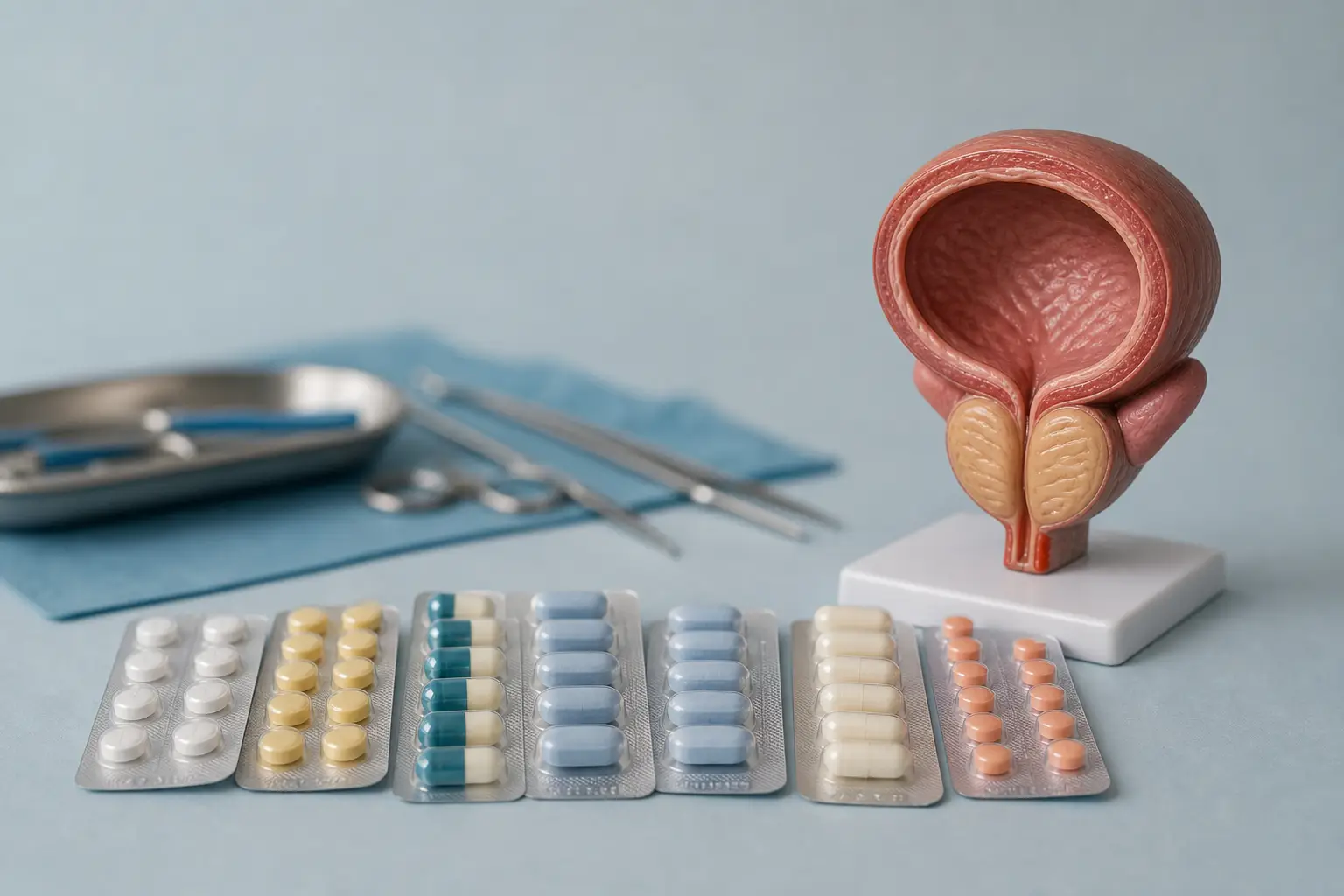
If urgency remains the main problem, bladder medications such as antimuscarinics or a beta-3 agonist may be discussed, with the benefits and side effects explained for your individual circumstances. For postmenopausal women, topical vaginal oestrogen may be considered. Where oral medication is unsuitable or ineffective, bladder Botox injections or nerve stimulation techniques such as percutaneous tibial nerve stimulation or sacral neuromodulation may be offered. These options can be particularly useful when the urgency element of mixed incontinence dominates.
Surgery is considered when conservative treatment has been given a fair trial and stress leakage remains the main burden. Options discussed in UK practice include colposuspension, autologous fascial sling procedures and urethral bulking agents for women, and male slings or an artificial urinary sphincter for men, usually after prostate surgery. Each carries different benefits, risks and recovery profiles, and the choice depends on your anatomy, previous surgery and personal priorities. Any procedure should follow a full discussion of alternatives and potential complications, in line with national guidance and informed consent standards.
Expectations should be honest. Conservative treatment often takes two to three months before benefits are clear, and gains are maintained only if pelvic floor exercises continue. Surgery for the stress component can substantially reduce leakage, but it does not treat urgency, and some patients continue to need bladder retraining or medication afterwards. Recovery after sling or colposuspension surgery usually involves several weeks of avoiding heavy lifting and strenuous exercise, with a planned follow-up review.
Prevention and maintenance matter too. Keeping to a healthy weight, staying active, managing constipation, stopping smoking and continuing pelvic floor exercises after childbirth or pelvic surgery all support long-term bladder control.
It is reasonable to start with your GP, who can arrange initial tests and refer onwards. A specialist consultation may be helpful if symptoms persist despite pelvic floor exercises and lifestyle changes, if you are considering surgery, if previous incontinence treatment has not worked, or if there are additional features such as recurrent infections, blood in the urine or significant prolapse. Patients from Brighton and the surrounding Sussex area can be seen privately or through the NHS for assessment of incontinence and bladder problems.
Mixed incontinence means having two types of urinary leakage together: stress leakage when you cough, laugh, lift or exercise, and urgency leakage when a sudden need to pass urine arrives too quickly to reach a toilet. One pattern is usually more troublesome than the other.
Often, yes. Supervised pelvic floor muscle training, bladder retraining, fluid and caffeine adjustments and weight management help many people considerably. Medication, bladder Botox or nerve stimulation may be added for urgency symptoms. Surgery is usually reserved for persistent stress leakage after conservative treatment has been tried.
Pelvic floor muscle training and bladder retraining are generally continued for at least three months before judging the result, and improvements build gradually. Bladder medications may show an effect within a few weeks. Your clinician will review progress and adjust the plan if symptoms are not improving.
It becomes more common with age, but it is not something you simply have to accept. The NHS and NICE both recognise urinary incontinence as a treatable condition, and most people gain meaningful improvement in symptoms and quality of life with appropriate assessment and treatment.
Not always. Many people begin conservative treatment after a history, examination, urine test and bladder diary. Urodynamic studies may be recommended when symptoms are unclear, when previous treatment has failed, or before considering surgery, so the bladder’s behaviour can be measured directly.
Yes. In men it is most often seen after prostate surgery or radiotherapy, or alongside an enlarged prostate causing urgency and frequency. Assessment focuses on prostate function, bladder emptying and sphincter control, and treatment is tailored accordingly.
Mixed incontinence combines two different bladder problems, which is why a clear diagnosis and a stepwise plan make such a difference. Identifying the dominant symptom, starting with pelvic floor training and bladder retraining, and reserving medication or surgery for persistent symptoms gives most patients a realistic path to improvement. Bladder leakage is common, but it should never be dismissed as something to live with.
If bladder leakage is affecting your daily life, a specialist consultation can clarify the cause and outline the treatment options suited to you. To discuss assessment and treatment for mixed incontinence in Brighton, you can arrange a consultation with Consultant Urological Surgeon Mr Ammar Alanbuki via the contact page, or read more about incontinence treatment and other female urology services.
Consultant Urological Surgeon at University Hospitals Sussex NHS Foundation Trust. Specialist in robotic and minimally invasive urology, prostate surgery, kidney cancer and stone disease.
Book a private consultation to discuss your symptoms.