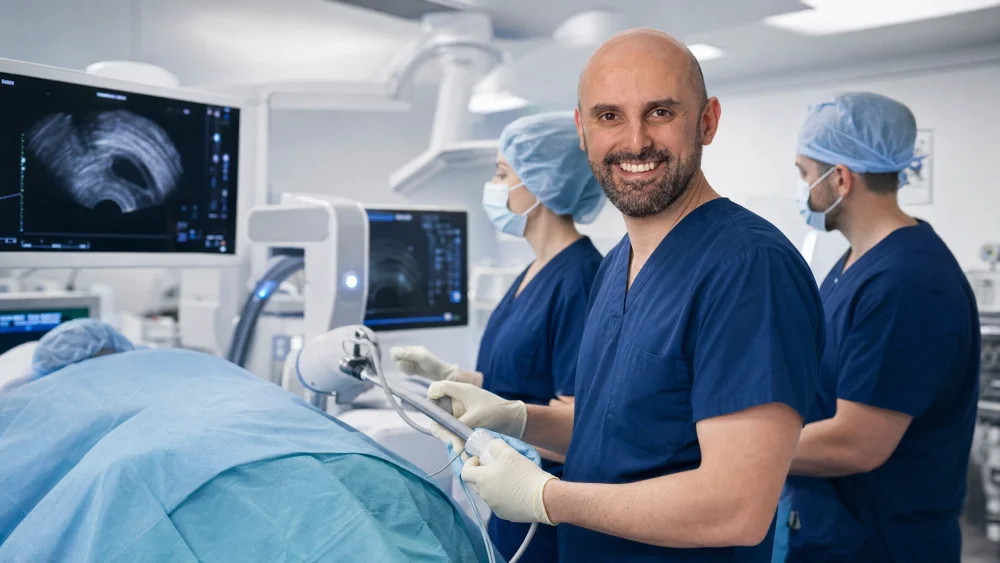
What this consultation covers
Benign prostatic hyperplasia (BPH) non-cancerous enlargement of the prostate is one of the most common conditions affecting men over 50. An enlarged prostate compresses the urethra, causing a range of urinary symptoms that progressively impact quality of life. Mr Alanbuki offers the full portfolio of evidence-based surgical treatments for BPH, tailored to each patient’s prostate size, anatomy, symptom burden, and personal priorities.
Treatment options discussed in clinic include Aquablation, UroLift, Rezum water vapour therapy, TURP (transurethral resection of the prostate), and laser enucleation — ensuring every patient has access to the intervention most likely to deliver lasting, effective relief with the best possible side-effect profile.
IPSS symptom score & flow rate testing
Comparison of all surgical options
Prostate-specific antigen (PSA) review
Preservation of sexual function
Imaging & anatomy assessment
Expected recovery & follow-up plan
Surgical options available
Aquablation
Robotic waterjet treatment heat-free, precise, and with the lowest rates of sexual side effects. Ideal for moderate-to-large prostates.
UroLift
Tiny implants hold enlarged prostate tissue away from the urethra. No cutting, no heat, no ejaculatory dysfunction. Suitable for smaller prostates.
Rezum Water Vapour Therapy
Steam energy delivered to excess prostate tissue, causing it to shrink over several weeks. Minimally invasive with a short recovery period.
TURP
The established gold standard for enlarged prostate resection of obstructing tissue under anaesthetic. Highly effective and widely available.
Frequently Asked Questions
How do I know which treatment is right for me?
The right treatment depends on several factors: your prostate size and shape, the severity of your symptoms, whether preserving ejaculatory function is important to you, and your overall health. Mr Alanbuki will review all of these during consultation and present a personalised recommendation with a clear explanation of the pros and cons of each option.
Can BPH be treated without surgery?
Yes. Mild to moderate BPH is often managed effectively with lifestyle changes, bladder training, and medication (alpha blockers or 5-alpha reductase inhibitors). Surgery is typically considered when symptoms are significantly affecting quality of life, medication has failed, or complications such as urinary retention have occurred.
Is an enlarged prostate the same as prostate cancer?
No. BPH is a non-cancerous condition the prostate simply grows larger with age, which is a normal physiological process. However, some of the symptoms overlap with those caused by prostate cancer, so Mr Alanbuki will always check your PSA and assess for cancer as part of a thorough BPH evaluation.