What this consultation covers
Bladder cancer is the fourth most common cancer in men in the UK. When bladder cancer is suspected — often presenting as blood in the urine (haematuria) prompt specialist assessment is essential. Mr Alanbuki will arrange a flexible cystoscopy examination of the bladder, combined with imaging and urine cytology, to establish whether cancer is present and, if so, to determine its stage and grade.
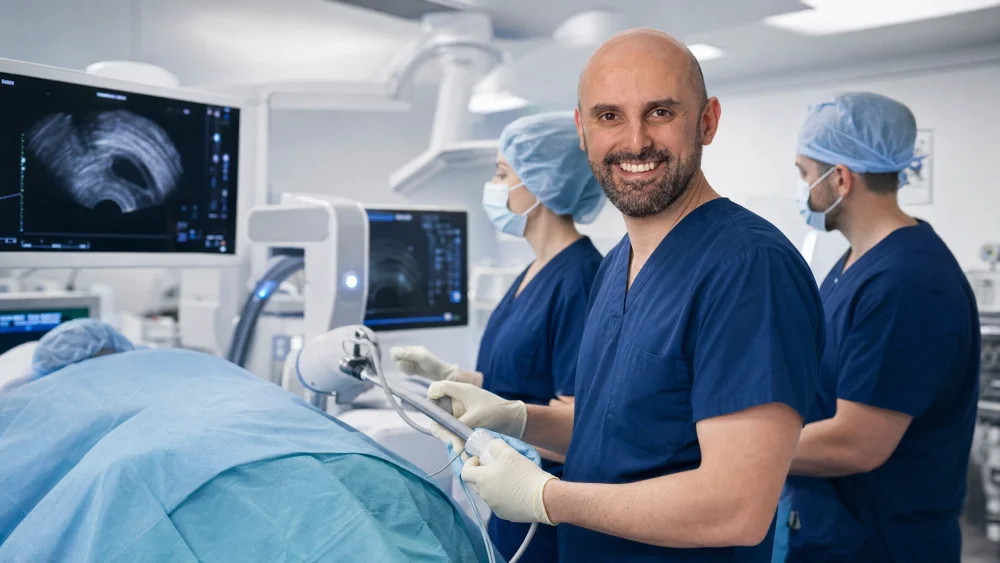
For non-muscle-invasive bladder cancer, the primary surgical treatment is transurethral resection of bladder tumour (TURBT) a minimally invasive procedure performed under general anaesthetic. For higher-risk or muscle-invasive disease, Mr Alanbuki will discuss options including radical cystectomy (bladder removal with urinary reconstruction), and will coordinate care with the wider oncological team where systemic treatment is also required.
Cystoscopy & biopsy arrangement
TURBT surgical planning
CT urogram & imaging review
Adjuvant treatment options
Staging & risk stratification
Long-term surveillance programme
Surgical treatment options
TURBT (Transurethral Resection)
The standard first-line surgical treatment for bladder tumours performed endoscopically through the urethra, with no incisions required.
Radical Cystectomy
Surgical removal of the bladder for muscle-invasive cancer, with urinary reconstruction to restore bladder function using a segment of bowel.
Intravesical Therapy (BCG/Chemotherapy)
Following TURBT, instillations of BCG or chemotherapy directly into the bladder can be used to reduce the risk of cancer recurrence.
Frequently Asked Questions
What are the main symptoms of bladder cancer?
The most common presenting symptom is painless, visible blood in the urine (macroscopic haematuria). Other symptoms include microscopic haematuria found on routine testing, urinary urgency, frequency, and pain on urination. Any episode of blood in the urine warrants prompt specialist assessment.
How is TURBT performed?
TURBT is performed under general or spinal anaesthesia. A resectoscope is passed through the urethra into the bladder, and the tumour is removed using an electrical loop. The procedure typically takes 30–60 minutes and most patients go home the same day or the following morning.
How often will I need surveillance cystoscopy after treatment?
The surveillance schedule depends on tumour grade and stage. Low-risk tumours typically require cystoscopy at three months, then annually. High-risk disease requires more frequent surveillance — every three months for the first two years. Mr Alanbuki will set out a clear surveillance schedule tailored to your individual risk profile.