Kidney stone laser surgery is one of the most effective and minimally invasive treatments available for removing kidney stones that are too large to pass on their own. Using a precisely targeted laser, a urologist can break stones into tiny fragments that the body can then pass naturally, often without the need for any cuts or incisions. For many patients, it offers a reliable route to relief with a relatively straightforward recovery. As of 2026, the success rate of kidney stone laser surgery is around 90%, making it a highly effective option.
Mr Ammar Alanbuki is a consultant urologist practising across London, Horley, and Brighton, with specialist expertise in stone surgery, robotic procedures, and urological conditions affecting both men and women. Laser stone surgery is one of his core treatment areas, and he works with patients to find the most appropriate approach based on their individual circumstances.
What Is Kidney Stone Laser Surgery?
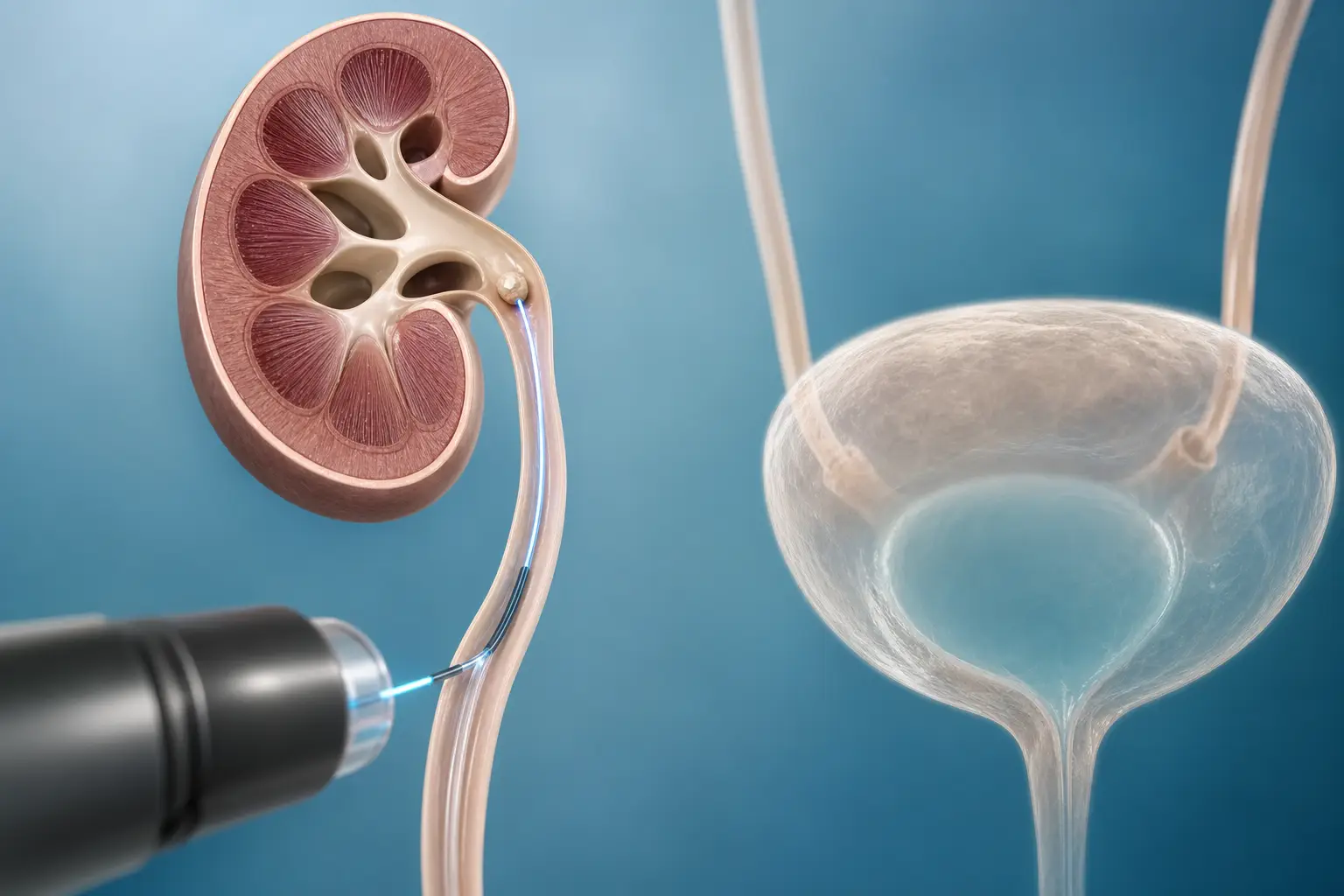
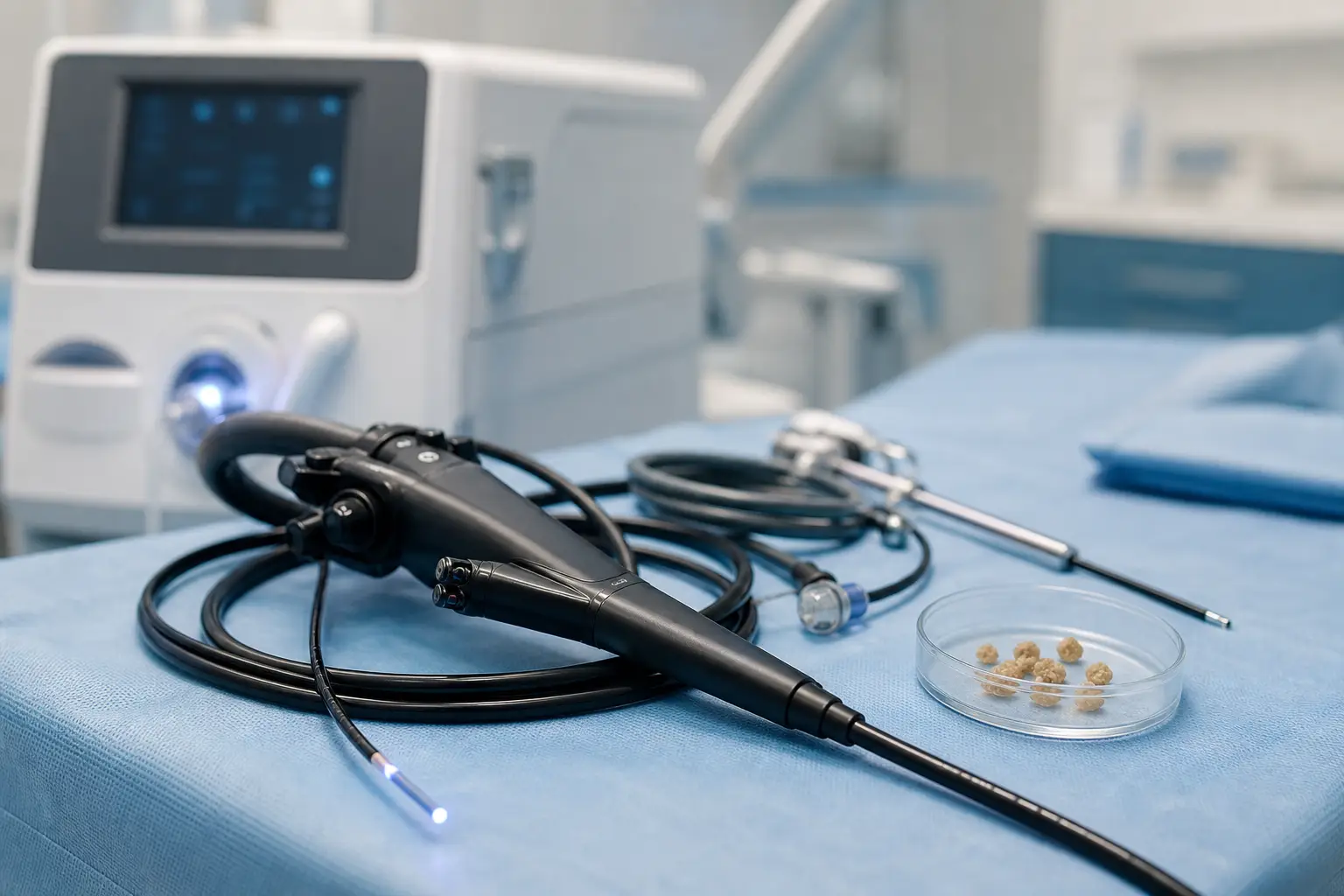
Kidney stone laser surgery, most commonly performed as a procedure called ureteroscopy with laser lithotripsy, involves passing a thin, flexible telescope through the urethra and bladder to reach the stone. A laser fibre is then used to break the stone into smaller pieces. No external cuts are required in most cases.
According to NHS guidance on kidney stone treatment, ureteroscopy is a widely used and well-established option, particularly for stones located in the ureter or kidney that have not responded to other approaches. A study showed that over 70% of patients experience significant improvement in their symptoms after undergoing laser lithotripsy.
Who Might Be Suitable for Kidney Stone Laser Surgery?
Not every kidney stone requires surgery. Smaller stones often pass without intervention, with the support of adequate hydration and pain relief. However, kidney stone laser surgery may be recommended when:
- The stone is too large to pass on its own.
- The stone is causing significant pain or blocking urine flow.
- There is an associated infection that needs urgent treatment.
- Conservative management has not been successful.
- The stone is in a position that makes other treatments less suitable.
A full assessment, including imaging such as a CT scan, helps determine the most appropriate treatment. Mr Alanbuki will discuss all available options during a consultation.
What Are the Benefits of Kidney Stone Laser Surgery?
Kidney stone laser surgery offers several advantages over older or more invasive techniques:
- Minimally invasive: No external incisions are needed in most cases.
- High stone clearance rates: Laser technology allows precise fragmentation of stones of varying sizes and compositions.
- Shorter hospital stay: Many patients are treated as day cases or with an overnight stay.
- Faster recovery: Most people return to normal activities within a few days to a week.
- Suitable for complex cases: Flexible ureteroscopy can reach stones in difficult locations within the kidney.
What Are the Risks of Kidney Stone Laser Surgery?
As with any surgical procedure, kidney stone laser surgery carries some risks. These are generally low but important to understand before making a decision.
Common Side Effects
- Mild discomfort or burning when passing urine after the procedure.
- Temporary blood in the urine.
- Urinary frequency or urgency in the days following surgery.
Less Common Risks
- Urinary tract infection.
- Injury to the ureter (rare).
- Incomplete stone clearance, which may require a further procedure.
- Temporary placement of a ureteric stent, which can cause some discomfort.
Your clinician will discuss these risks in detail before any procedure takes place, ensuring you have the information needed to make an informed decision.
What Results Can Patients Expect?
For many patients, kidney stone laser surgery provides effective stone clearance and significant relief from symptoms. Results can vary depending on the size, number, and composition of the stones, as well as individual factors such as kidney anatomy.
A follow-up appointment is usually arranged to confirm stone clearance and to discuss any preventative measures that may help reduce the risk of stones recurring. Lifestyle adjustments, such as increasing fluid intake, may also be recommended alongside treatment.
Recovery After Kidney Stone Laser Surgery
Recovery is generally straightforward for most patients. Some temporary discomfort is normal, particularly if a ureteric stent has been placed to support healing. Stents are typically removed after a short period, usually one to two weeks, depending on the individual case.
Most patients are able to return to light activities within a few days. Strenuous exercise and heavy lifting are usually avoided for a short period. Your clinician will provide tailored recovery guidance based on your procedure and overall health.
Taking the Next Step
If you have been diagnosed with kidney stones or are experiencing symptoms such as severe flank pain, blood in the urine, or recurrent urinary infections, it is worth speaking to a specialist. Early assessment can help determine whether kidney stone laser surgery or another treatment approach is most appropriate for you.
To find out whether kidney stone laser surgery may be suitable for you, book a consultation with Mr Ammar Alanbuki. He sees patients across London, Horley, and Brighton, and offers expert assessment and personalised care for a wide range of urological conditions, including laser stone surgery, incontinence treatments, and prostate surgery.
This content is intended for general information only and does not constitute medical advice. Please consult a qualified clinician for advice specific to your situation. If you are experiencing severe pain, fever, or difficulty passing urine, seek urgent medical attention.